What Your Starter Pokémon Reveals About the Collector You Are Today
There's a moment every Pokémon fan remembers — the cursor hovering over that first choice, the music looping softly in the background, the weight of a decision that felt way bigger than it had any right to. You picked a starter. And weirdly? That choice might still be steering your collection twenty-plus years later.
We're not talking about personality quizzes here. This is about real patterns — the kind you start noticing when you dig into how collectors actually behave. Which cards they prioritize. How much they're willing to spend. Whether they're chasing meta value or sentimental gold. Your starter wasn't just a Pokémon. It was a lens, and a lot of us are still looking through it.
The Gen 1 Loyalists: Bulbasaur, Charmander, Squirtle
Let's be honest — if you started with a Kanto starter, there's a decent chance you still think of the Base Set as the benchmark for everything. Gen 1 collectors tend to operate with a prestige mindset. They're the ones obsessing over PSA grades, hunting down Shadowless Charizards, and treating their binders like investment portfolios rather than casual hobby collections.
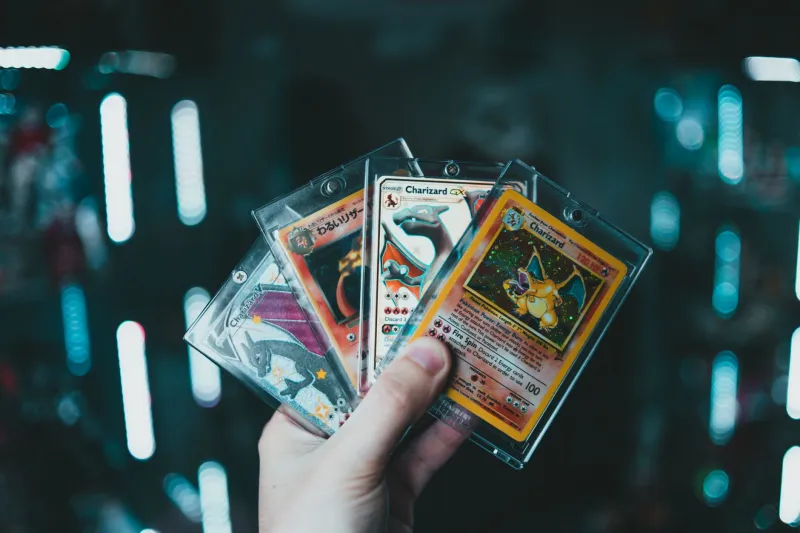
Charmander pickers in particular tend to skew toward high-value single cards. The Charizard effect is real — generations of collectors grew up watching that card sit behind glass at card shops with a price tag that felt untouchable. That early exposure to aspirational value shapes how people spend. Charizard collectors are often willing to drop serious money on one iconic card rather than spreading across a broad set.
Bulbasaur fans, on the other hand, tend to be the underdog completionists. They picked the starter nobody else wanted, and there's a certain contrarian pride that carries into their collecting style. These are often the folks building out full set runs, chasing every variant, and quietly proud that their collection is deeper than it is flashy.
Squirtle collectors? Generally the most balanced of the three. Patient, methodical, and less likely to panic-buy during market spikes. If you picked Squirtle, you probably still do your research before pulling out your wallet.
Johto Starters and the Nostalgia-Value Tug of War
Gold and Silver players occupy a fascinating middle ground. They're nostalgic, but not quite as aggressively sentimental as the Kanto crowd. Cyndaquil, Totodile, and Chikorita fans grew up in what many consider Pokémon's creative peak, and that shapes a collecting style that values artistry and storytelling as much as raw card value.
Totodile pickers tend to gravitate toward full-art and alt-art cards — the ones where the illustration does something interesting. They're less concerned with whether a card is competitively relevant and more interested in whether it looks incredible in a sleeve. You'll find these collectors spending a disproportionate amount on cards that most price trackers would call mid-tier, simply because the artwork hits differently.
Cyndaquil fans often have the most emotionally driven collections. Typhlosion's long-running status as a fan favorite that never quite dominated the meta mirrors something in how these collectors think — they're loyal to what they love even when the market disagrees. That can lead to some genuinely unique collections, but it can also mean holding cards that depreciate while waiting for a resurgence that may or may not come.
Hoenn and Sinnoh Starters: The Bridge Generation
If your first game was Ruby, Sapphire, Diamond, or Pearl, you came up during a period when Pokémon was evolving fast and the TCG was finding its footing as a serious hobby. These collectors tend to be more adaptive. They understand that the market shifts, that new sets can reshape what's valuable, and they're generally less emotionally attached to any single era.
Torchic and Chimchar fans especially tend to show up in competitive play discussions. Both starters are tied to games that had strong competitive communities, and that carries over. These collectors often double as players — they're buying cards they can actually use in decks, not just display.
This is also the generation most likely to flip cards strategically. They grew up watching the hobby mature, they saw prices fluctuate, and they learned early that sentiment and market value don't always align. That's not cynicism — it's a practical approach that often leads to smarter long-term decisions.
Modern Starters: Scarlet & Violet and the New Collector Wave
Sprigatito, Fuecoco, and Quaxly represent something genuinely new in the starter conversation. Players who started with Scarlet and Violet are entering the hobby at a moment when the TCG market is more accessible than ever but also more volatile. Their collecting instincts are being shaped in real time.
Fuecoco fans seem to be emerging as the community's chaos agents in the best possible way — drawn to big personalities, flashy pulls, and the social side of collecting. These are the collectors posting their hauls on social media, trading at locals, and genuinely treating the hobby as a community experience first and an investment second.
Sprigatito collectors are already developing a reputation for deep fandom loyalty. The character resonated hard, and the cards are being chased with an intensity that mirrors what early Charizard collectors must have felt. Whether that translates into long-term value is still an open question, but the passion is undeniable.
Does Starter Loyalty Actually Help or Hurt Your Collection?
Here's the honest answer: it depends entirely on what you want from collecting.
If your goal is pure enjoyment, starter loyalty is a feature, not a bug. Having a through-line — a character or a generation that anchors your collection — gives it meaning that no price tracker can quantify. A binder full of cards you genuinely love will always feel more satisfying than a portfolio optimized for resale.
If you're thinking about long-term value, though, blind loyalty can be expensive. Chasing every card featuring your favorite starter without considering market saturation or print run size is how collections stall. The collectors who tend to do best financially are the ones who let nostalgia inform their interests but don't let it override their judgment.
The sweet spot most experienced collectors land on is a hybrid approach — a personal collection of meaningful cards that aren't for sale, and a separate, more strategic layer of cards acquired with an eye on value. Your starter lives in the first pile. Your investment thinking lives in the second.
The Poke House Take
Your starter Pokémon was never just a game mechanic. It was the beginning of a relationship with this franchise, and like most first impressions, it stuck. Whether you're a Charizard-chasing completionist or a Fuecoco fan building your first real collection, understanding the instincts that drive you is genuinely useful.
Know why you're buying what you're buying. Lean into the nostalgia when it brings you joy. Push back against it when it's costing you money you didn't mean to spend. And whatever you do — don't let anyone tell you your starter was the wrong choice.
They were wrong in 1998 and they're still wrong now.