Are Your Childhood Pokémon Secretly Sabotaging Your Collection?
Let's be honest: most of us didn't get into Pokémon cards because we ran a spreadsheet on market trends. We got in because of a Saturday morning cartoon, a scratched-up Game Boy, or that one kid on the playground who had a holographic Blastoise and made us feel like we were missing out on something sacred. The emotional roots of this hobby run deep — and that's exactly what makes them so dangerous when you're trying to collect smart.
Nostalgia isn't inherently bad. It's part of what makes Pokémon collecting feel different from, say, flipping baseball cards or hunting down rare sneakers. But there's a growing conversation in the collector community about the very real financial cost of letting sentiment drive every single purchase decision. And if you've ever dropped serious money on a Base Set card just because it felt right, this one's for you.
The Psychology Behind the Pull
There's actual science behind why Gen 1 Pokémon hold such an iron grip on collectors' wallets. Psychologists call it the "reminiscence bump" — the tendency for people to have stronger emotional memories tied to experiences from their childhood and early teen years. For a huge chunk of the American Pokémon fanbase, that window falls squarely between 1998 and 2004, which maps almost perfectly onto the original 151 and early-era card sets.
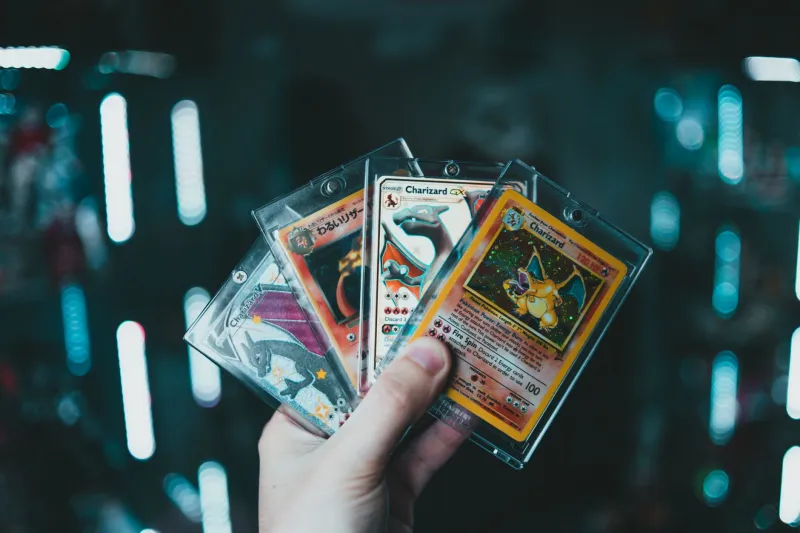
When you see a Shadowless Charizard or a first-edition Mewtwo, you're not just seeing a card. You're seeing a version of yourself at nine years old, trading cards on the bus or watching the original anime before school. That emotional charge is real, and the market knows it. Sellers know it too.
"People pay a premium for the feeling, not just the card," says Marcus T., a Texas-based collector who's been building and selling Pokémon collections for over a decade. "I've watched guys spend three times what a card is objectively worth because it reminds them of something. That's not investing — that's therapy with a price tag."
Harsh? Maybe. But it's a perspective worth sitting with.
What the Numbers Actually Say
Here's where things get interesting. If you look at raw price performance over the last several years, vintage Gen 1 cards — especially graded copies of the heavy hitters — have had massive runs. A PSA 10 Base Set Charizard famously sold for hundreds of thousands of dollars at peak hype. So nostalgia collecting works, right?
Not so fast. Those peak prices were driven largely by a pandemic-era speculation bubble that's since cooled significantly. Many of the same cards that were fetching astronomical sums in 2020 and 2021 have corrected sharply. Meanwhile, certain modern Scarlet & Violet era cards — particularly alt-art and special illustration rare pulls — have quietly been appreciating in ways that aren't getting nearly as much mainstream attention.
Cards like the Charizard ex Special Illustration Rare from Obsidian Flames, or select Paldean Fates pulls, have shown strong sustained demand from both players and collectors. They're gorgeous, they're relatively accessible compared to graded vintage, and they're tied to a generation of fans who are right now in their prime collecting years.
But when's the last time you saw someone get misty-eyed over a Iono full art? The emotional pull just isn't there yet — and that's precisely the opportunity.
The Blind Spot Nobody Talks About
Here's the trap in plain terms: if your entire collecting strategy is built around chasing the cards that made you feel something at age eight, you're essentially competing in the most crowded, most emotionally inflated corner of the entire market. Everyone wants those cards. Everyone has a story about those cards. And that demand keeps prices elevated in ways that can be really hard to justify from a pure value standpoint.
Meanwhile, modern sets get dismissed as "just new stuff" by collectors who haven't given them a serious look. The artwork in recent Scarlet & Violet sets is genuinely some of the best in the franchise's history. The print runs on certain chase cards are more controlled than people assume. And the player base actively using these cards in competitive formats creates a demand floor that vintage cards — which nobody actually plays with — simply don't have.
"I see newer collectors make this mistake constantly," says Priya L., who runs a popular Pokémon trading Discord with members across the US. "They come in wanting to collect what they grew up with, which is fine, but they write off anything from the last five years without even looking at it. Some of those modern cards are going to be really sought after in ten years, and right now you can still get them at reasonable prices."
How to Find Your Balance
None of this means you should abandon your childhood favorites entirely. Collecting is supposed to be fun, and a collection that makes you zero emotional connection is just an asset portfolio in a binder. The goal isn't to strip the joy out of it — it's to make sure nostalgia is one input in your decision-making, not the only one.
A few practical frameworks that experienced collectors swear by:
Set a nostalgia budget. Decide upfront what percentage of your collecting spend can go toward pure sentimental purchases — cards you want because you love them, full stop. Maybe that's 20%, maybe it's 40%. The point is to ring-fence it so it doesn't bleed into every decision.
Research modern sets with the same energy. Before you dismiss a new release, actually dig into it. Look at which cards are getting traction on eBay, which ones tournament players are pulling for their decks, and which art styles are resonating with younger collectors. Treat it like homework.
Ask yourself the hard question. When you're about to pull the trigger on a pricey vintage card, pause and ask: "Am I buying this because it's a smart addition to my collection, or because it makes me feel like a kid again?" Both answers can be valid — but you should know which one is driving you.
Watch the grade-to-price ratio. A PSA 9 of a modern chase card often represents far better value than a PSA 9 of an equivalent vintage card, purely because the emotional premium on the vintage piece inflates the price beyond what the market fundamentals support.
The Bottom Line
Pokémon collecting is one of the few hobbies where emotion and economics are constantly wrestling each other for control. The nostalgia pull is real, it's powerful, and honestly — it's part of what makes this community so special. Nobody's asking you to become a cold-blooded card flipper who treats Pikachu like a commodity.
But if your collection isn't growing the way you hoped, or if you keep watching other collectors make moves that seem to pay off while yours stay flat, it might be worth asking whether your nine-year-old self is running the show a little too often.
The best collections we've seen at The Poke House tend to be the ones that honor the past without being held hostage by it. A couple of grails from the sets that started it all, surrounded by sharp modern picks that have real room to grow — that's a collection that tells a story and holds its value.
Your childhood favorites deserve a spot in the binder. Just maybe not every spot.