Fake Cards Are Getting Scary Good — Here's How to Protect Your Collection
There's a moment every collector dreads. You tear open a pack, pull what looks like a vintage Charizard or a pristine alt-art Umbreon, and something just feels off. Maybe the colors are slightly too saturated. Maybe the card stock feels a little thin. Or maybe you can't put your finger on it at all — and that's exactly the problem.
Counterfeit Pokémon cards aren't new, but they've gotten dramatically more sophisticated over the last few years. What used to be laughably bad knock-offs — blurry fonts, neon-colored energy symbols, cardboard that bent like a napkin — have evolved into convincing replicas that are catching even seasoned hobbyists off guard. Flea markets, Facebook Marketplace, eBay listings, and even some local card shops have become hunting grounds for bad actors looking to cash in on the hobby's booming popularity.
If you're buying cards right now, whether you're hunting for grail pieces or just restocking your binder, knowing how to authenticate what you're holding is no longer optional. It's essential.
Why the Fake Card Problem Has Gotten Worse
The Pokémon card market exploded during the pandemic years, and while things have cooled since the peak frenzy of 2021, high-value singles still command serious money. A first-edition Base Set Charizard in decent condition? Thousands of dollars. A PSA 10 Moonbreon (Umbreon VMAX Alternate Art from Evolving Skies)? Still pulling four figures on a good day.
Where there's money, there are counterfeiters. Printing technology has improved dramatically, and overseas operations — many based in China — have gotten remarkably good at mimicking Pokémon's card design language. Some fakes are now sophisticated enough to fool the casual eye at a glance, which means the old "just look at it" approach isn't cutting it anymore.
The real danger isn't just buying a fake yourself. It's accidentally introducing fakes into the broader market — selling them on, trading them at locals, or submitting them to grading companies like PSA or Beckett, where a counterfeit slip-through can have serious consequences for your reputation.
The Home Authentication Toolkit
You don't need a jeweler's loupe and a forensics lab to catch most fakes. A few simple tools and techniques will handle the vast majority of counterfeits you're likely to encounter.
The Light Test Hold the card up to a bright light source — a lamp or your phone's flashlight works great. Authentic Pokémon cards have a distinctive black inner layer sandwiched between the front and back printing layers. This layer blocks light and gives real cards a characteristic opacity. Many fakes either lack this layer entirely or use a cheap substitute, meaning light bleeds through in a way it shouldn't. If the card glows like a flashlight filter, that's a serious red flag.
The Feel Test Genuine cards have a very specific texture and rigidity. The front surface has a smooth, slightly glossy feel, while the back has a subtle texture. Fakes often feel either too slick, too rough, or too flimsy. Cards that bend too easily or snap back with an unusual snap are worth scrutinizing. That said, this test takes practice — handling a lot of real cards builds the muscle memory you need to notice when something's wrong.
The Print Quality Check Grab a magnifying glass if you have one. Under magnification, real Pokémon cards show a clean dot-matrix printing pattern. Counterfeits often display smearing, uneven dot distribution, or a muddy quality that becomes obvious once you know what you're looking for. Pay close attention to fine text — the HP numbers, attack damage, and flavor text on authentic cards are crisp and readable even at tiny sizes. Blurry or slightly misaligned text is a classic tell.
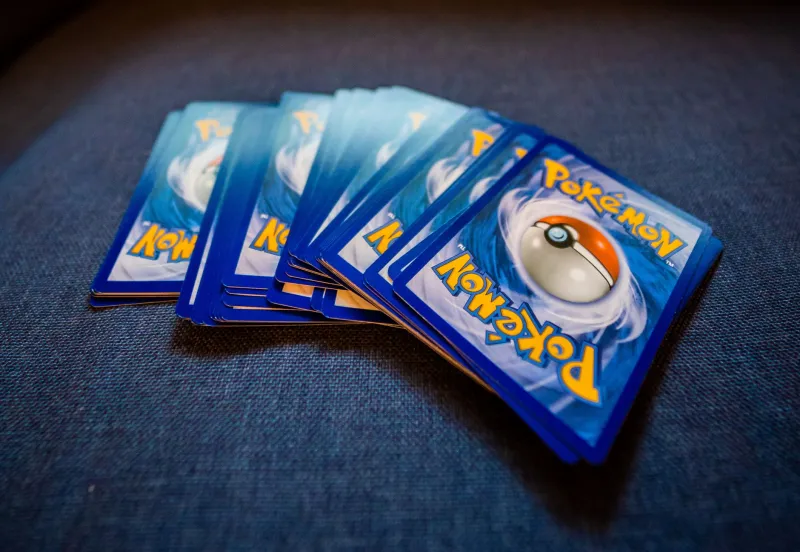
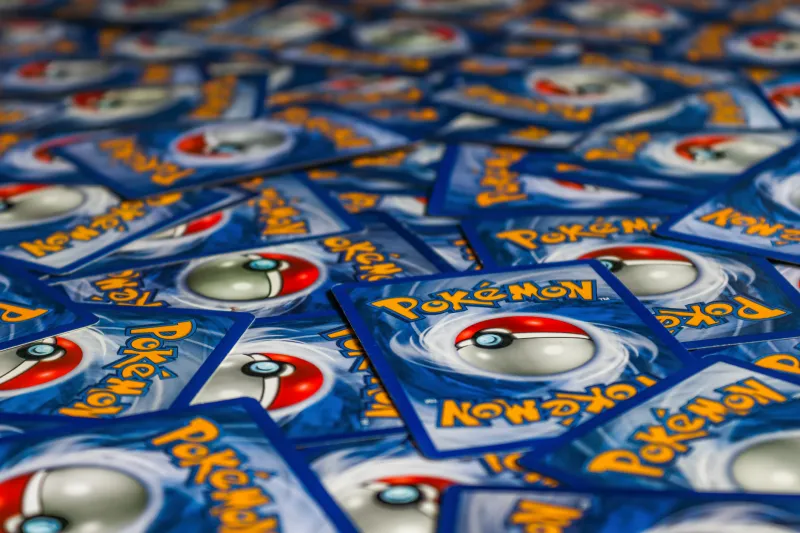
The Color Comparison If you have a verified authentic copy of the same card — or even a card from the same set — compare them side by side. Fakes frequently get the color balance wrong. Blues are too purple, yellows are too orange, or the card back's distinctive blue is slightly off-tone. The Pokémon card back is actually one of the best reference points: counterfeiters consistently struggle to nail that exact shade.
Red Flags When Buying Online
Online marketplaces are where most collectors get burned, and the warning signs aren't always obvious.
Be skeptical of listings with only one or two photos, especially if those photos are small, low-resolution, or suspiciously angled. Legitimate sellers of high-value cards typically provide multiple clear shots of both the front and back. If a seller can't or won't provide additional photos when asked, walk away.
Price is an obvious signal, but it cuts both ways. Cards priced dramatically below market value are almost always too good to be true. But some counterfeiters have gotten bold enough to price fakes at or near market value, banking on buyers assuming a fair price means a real card. Always cross-reference against TCGPlayer's market price data before pulling the trigger on anything significant.
Seller feedback matters, but don't treat it as a guarantee. Check specifically for feedback on Pokémon card transactions, and scan for any mentions of authenticity issues in the reviews. A seller with 500 glowing reviews for video game accessories isn't the same as a seller with 500 glowing reviews for Pokémon singles.
What to Watch for at Local Card Shops and Conventions
In-person buying feels safer, but it's not foolproof. Reputable local card shops (LCS) typically vet their inventory, but smaller operations and convention vendors don't always have the resources — or the incentive — to do the same.
When shopping at a convention or a shop you haven't visited before, don't be shy about asking to inspect a card before you buy. Any legitimate seller will let you look closely. If someone gets defensive about you examining a card, that tells you everything you need to know.
Also pay attention to how cards are stored. Authentic high-value cards should be in sleeves and toploaders or card savers. A valuable card rattling around loose in a display case is either a sign of careless handling or a fake that doesn't need protection because it's worthless.
When to Bring in the Experts
For cards above a certain value threshold — let's say anything you'd consider spending $50 or more on — it's worth thinking about professional authentication. PSA, Beckett, and CGC all offer grading services that include authentication as part of the process. Yes, there's a fee and a turnaround time, but for a card that could be worth hundreds or thousands of dollars, the peace of mind is worth it.
If you're not ready to submit for grading, consider posting clear photos in collector communities before completing a big purchase. The Pokémon subreddits, Discord servers, and Facebook collector groups are full of experienced hobbyists who can often spot a fake at a glance. The community is genuinely helpful here — most collectors have strong feelings about counterfeits and are happy to share their expertise.
The Bottom Line
The counterfeit card market isn't going away, and if anything, it's going to keep getting more sophisticated as the hobby's value grows. But knowledge is your best defense. Learn what real cards feel like, build your eye for print quality, shop from reputable sources, and don't let a good deal override your instincts.
Your collection represents real time, real money, and real passion. It deserves to be protected.