How You're Storing Your Cards Is Slowly Killing Their Value
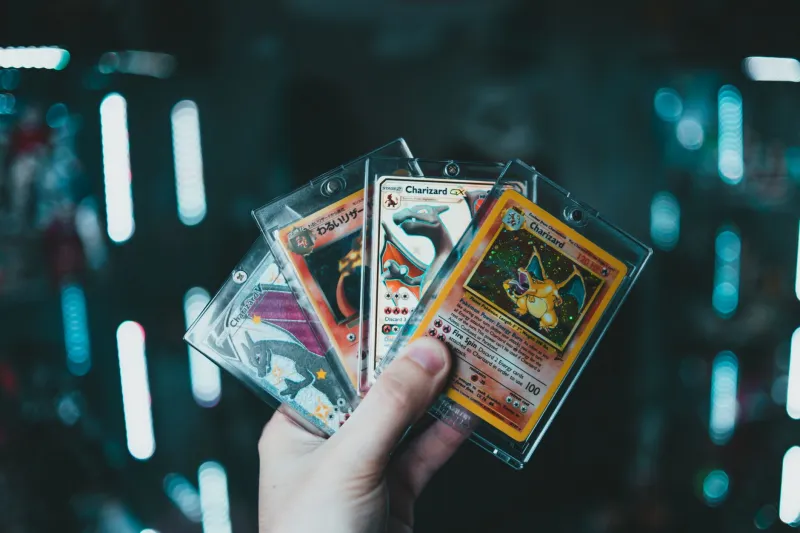
Let's get something straight right off the bat: how you store your Pokémon cards matters just as much as which cards you own. Maybe more. You could be sitting on a first-edition Charizard or a pristine Umbreon VMAX Alt Art, and if it's been living in the wrong environment, you're already losing money — even if you haven't sold a single thing.
This isn't fearmongering. It's physics, chemistry, and a little bit of collector tough love.
We dug into the specifics — talking to veteran collectors, reviewing grading company documentation, and combing through community forums where serious players compare notes — to find out which storage setups actually hold up and which ones are, as one collector put it, "expensive theater."
The Silent Killers: What's Actually Damaging Your Cards
Before we get into specific products, you need to understand what you're protecting against. The four main culprits of card degradation are humidity, temperature fluctuation, UV light exposure, and physical pressure.
Humidity is probably the most underestimated threat. Cards are made of layered paper and ink, and when moisture gets in, the layers start to separate. You'll see it first as warping — that subtle curve that turns a potential PSA 10 into a PSA 7 real fast. In humid climates like Florida, Louisiana, or coastal regions of the Pacific Northwest, this is an everyday battle, not an occasional concern.
Temperature swings are sneaky. A card stored in a garage that hits 90°F in summer and 30°F in winter is being physically stressed every single season. The expansion and contraction of materials — however slight — compounds over years.
UV light fades colors and weakens surface integrity. That doesn't just mean a card looks less vibrant; it means the gloss layer that graders scrutinize under their loupes is compromised.
And physical pressure? Overstuffed binders, stacked boxes, and penny sleeves crammed too tight create edge wear and surface scratches that don't show up until a grader holds the card under a light.
Binders: The Community Favorite That Comes With Caveats
Binders are everywhere in the Pokémon community, and for good reason — they're affordable, portable, and make browsing your collection genuinely satisfying. But not all binders are built the same, and the differences are significant.
Ring-style binders are the most common and the most problematic. The rings can put pressure on pages near the spine, causing edge damage over time. If you've ever noticed cards in the center columns of a ring binder developing subtle creases, that's why.
D-ring binders are better — the pages lay flatter and the pressure is more evenly distributed. Zippered binders add a layer of dust and humidity resistance that standard open-top binders simply don't offer.
The pages themselves matter too. PVC-free, acid-free sleeves are non-negotiable if you care about long-term condition. PVC off-gasses over time and can chemically interact with your cards' surface coating. It's a slow process, but it's real, and graders have flagged it.
Bottom line on binders: great for displaying and organizing mid-tier cards, but probably not where your high-value pulls should live permanently.
Toploaders and Semi-Rigids: The Everyday Workhorses
For individual card protection, the standard combo of a penny sleeve plus a toploader remains one of the most reliable setups out there. The sleeve prevents surface scratches, and the toploader's rigid structure guards against bends.
The issue is environmental exposure. Toploaders stored in a cardboard box in a closet are still subject to humidity and temperature swings. They're great at preventing mechanical damage but offer zero climate control.
One-touch magnetic cases take things up a notch. They're airtight-adjacent, reduce direct contact with the card surface, and look significantly more presentable for display purposes. For cards in the $50–$500 range that you're not quite ready to send to a grader, these are probably the sweet spot between protection and accessibility.
UV-Protected Display Cases: Better Than Nothing, But Know the Limits
UV-blocking acrylic cases have become popular among collectors who want to show off their best pulls without leaving them exposed. And yes, they do block a meaningful portion of UV radiation — typically 98–99% when you're buying from a reputable manufacturer.
But here's what the marketing doesn't tell you: UV protection doesn't equal humidity control. A beautiful wall-mounted display case with UV acrylic is still a static environment where moisture can accumulate, especially in rooms with fluctuating temperatures.
If you're going the display route, pair UV cases with silica gel packets nearby, keep them away from exterior walls (which experience more temperature variance), and avoid displaying in direct path of HVAC vents, which cycle dry and humid air regularly.
Climate-Controlled Storage: Is It Worth It?
Here's where the conversation gets polarizing. Climate-controlled storage — whether that's a dedicated collector cabinet, a small wine fridge repurposed for cards, or a full storage unit rental — is genuinely the gold standard for high-value preservation.
The ideal conditions most graders and serious collectors reference: around 65–70°F with 45–55% relative humidity. Consistent. Not fluctuating.
A dedicated humidity-controlled cabinet can run anywhere from $150 to several thousand dollars depending on capacity and features. For collectors with significant investments — we're talking cards worth $500 or more each — that math can make sense pretty quickly.
For everyone else, a more practical middle ground exists: store your best cards in airtight containers (like those sold for comic book preservation) with silica gel packets, and keep them in an interior room of your home where temperature is most stable. It's not glamorous, but it's effective and accessible.
What Graders Are Actually Seeing
When a card goes to PSA, BGS, or CGC, the graders aren't just looking at obvious damage. They're evaluating centering, surface condition, edge integrity, and corner sharpness under magnification and specific lighting conditions. The kinds of damage that accumulate from poor storage — micro-scratches, humidity warping, subtle fading — show up clearly under those conditions even when they're invisible to the naked eye.
The jump from a PSA 9 to a PSA 10 can represent a price difference of 200–400% on high-demand cards. That's not a rounding error. That's the cost of a binder stored in a humid basement for two years.
The Takeaway
There's no single perfect storage solution — it depends on the value of your cards, your local climate, your budget, and whether you want to display or archive. But the worst move is assuming your current setup is fine without actually evaluating it against environmental factors.
Check your humidity levels with a cheap hygrometer. Move high-value cards out of ring binders. Keep UV cases away from moisture sources. And if you've got cards worth serious money sitting in a garage or storage unit without climate control, fix that before you lose value you can't get back.
Your collection deserves better than benign neglect. Treat it accordingly.