You're Paying a Feelings Premium: How Nostalgia Quietly Inflates Pokémon Card Prices
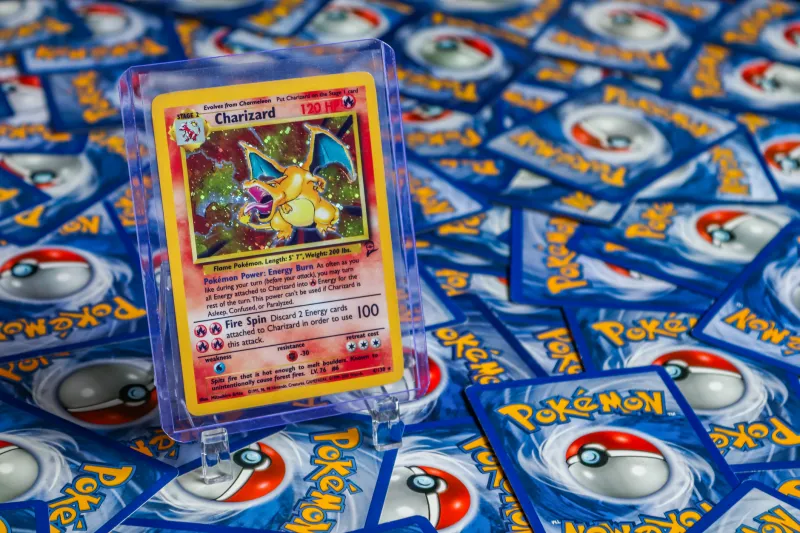
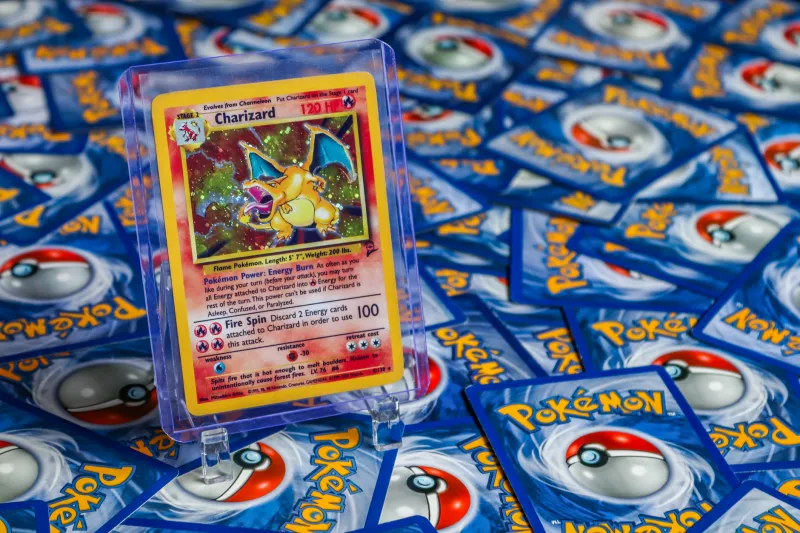
Let's be honest with each other for a second. When you see a Holographic Alakazam from Base Set listed for $80 in Near Mint condition, something happens in your brain that has absolutely nothing to do with market logic. You're not thinking about print runs or PSA populations. You're thinking about that Saturday morning in 1999 when you ripped open your first booster pack at a Walmart in Ohio and saw that foil shimmer for the very first time.
That feeling? It's real. But it's also costing you money.
Welcome to what collectors are starting to call the nostalgia tax — the invisible surcharge baked into the price of cards from generations that happen to align with a buyer's childhood. It's one of the most underappreciated forces shaping the Pokémon card market today, and if you're not aware of it, there's a decent chance you've already paid it without realizing.
What the Numbers Actually Say
Pull up any major card marketplace — TCGPlayer, eBay sold listings, Cardmarket — and compare equivalent cards across generations. Take a mid-tier holographic rare from Base Set versus a mid-tier holographic rare from a later expansion like Platinum or HeartGold & SoulSilver. Same condition, similar print scarcity, no competitive relevance in either case.
The Base Set card will almost always command a premium. Sometimes a modest one. Sometimes a jaw-dropping one.
Now here's the thing: Base Set is genuinely scarce in high grades. Nobody's arguing that a PSA 10 Blastoise should be cheap. But once you get into the mid-grade territory — the PSA 7s, the raw Near Mints, the cards that most everyday collectors are actually buying — the scarcity argument starts to wobble. There are a lot of Base Set cards out there. Americans kept them. Parents saved them. Attics across the country are full of them.
Yet prices hold firm, and in many cases climb, year after year. So if scarcity alone doesn't explain it, what does?
The Gen 1 Effect (And Why It's Not Going Away)
Pokémon launched in the US in 1998. The kids who bought those first Base Set packs are now in their late 20s and 30s — a demographic that, generally speaking, has disposable income and a deep well of emotional memory tied to those original 151 Pokémon.
That's not a coincidence. That's a market.
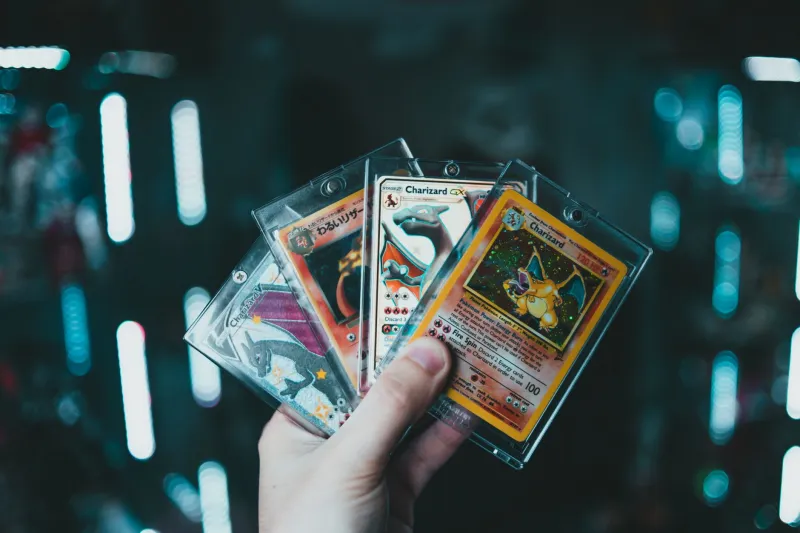
When collectors in that age bracket decide to reconnect with Pokémon — whether it's after the pandemic boom, a life milestone, or just a random Tuesday — they're not reaching for Sword & Shield packs. They're going straight back to what they remember. Charizard. Mewtwo. Gengar. The original starters. The cards that meant something when they were ten years old.
And because so many people in that cohort are chasing the same memories simultaneously, demand stays artificially elevated. The market isn't just pricing cards — it's pricing feelings.
Gen 2 (Gold and Silver) follows a similar pattern, though with slightly less intensity. The Neo Genesis set, home to fan favorites like Lugia and the baby Pokémon, consistently outperforms what pure rarity analysis would predict. Collectors who grew up on Crystal and Silver versions have a fierce loyalty to that era, and it shows up in their spending.
When Sentiment Becomes a Trap
Here's where it gets a little uncomfortable. Because the nostalgia tax isn't just a quirk of the market — it can actively work against you as a collector.
Imagine you've got a budget of $300 to expand your collection. If you're chasing Gen 1 nostalgia, that budget might get you a handful of mid-grade Base Set holos and a couple of Jungle or Fossil rares. But if you applied that same $300 to a generation with less emotional baggage attached — say, EX Ruby & Sapphire, or the Diamond & Pearl era — you could potentially build out a far more complete, visually impressive collection.
The cards are often just as beautiful. The artwork holds up. The Pokémon are beloved by a different but equally passionate fan base. But because fewer buyers are competing on pure sentiment, prices are more rational.
This isn't to say Gen 1 cards are a bad investment or that you shouldn't buy them. If a Base Set Venusaur brings you genuine joy, that joy has value too. But it's worth knowing what portion of that price tag represents the card, and what portion represents the memory.
What Collectors Are Actually Saying
Spend any time in Pokémon collecting communities — Discord servers, Reddit threads, local card shop back rooms — and you'll hear variations of the same confession over and over.
"I know I overpaid, but it was my favorite card as a kid."
"I don't even care that it's not worth it on paper. I just had to have it."
"Logically I know the Neo Destiny cards are undervalued right now, but I keep going back to Base Set."
There's no shame in any of that. Collecting has never been purely rational, and it probably shouldn't be. But there's a meaningful difference between choosing to pay a premium because the emotional return is worth it to you, versus paying that premium without realizing it exists.
Self-awareness is the whole game here.
Which Eras Are Actually Undervalued Right Now?
If you're open to exploring beyond your comfort zone, a few generations are genuinely flying under the radar right now.
The EX Series (Ruby & Sapphire through Power Keepers) features some of the most striking card designs in the game's history, with EX Pokémon dominating the visual landscape of the mid-2000s. These cards are increasingly hard to find in good condition, but they haven't hit the nostalgia ceiling yet because the collectors who grew up with them are just now entering serious buying age.
The Platinum and HGSS era is similarly positioned. Pokémon like Giratina and the Legendary Beasts have passionate fan followings, and the artwork from that period is exceptional. Yet pricing remains relatively measured compared to Gen 1 equivalents.
Black & White era cards are also starting to attract more attention from savvy collectors who see the writing on the wall — the nostalgia wave will reach Generation 5 eventually, and getting in before it does is a classic collector's move.
The Bottom Line
The Pokémon card market is one of the few places where emotion and economics collide so openly and so consistently. Understanding that dynamic doesn't mean you have to fight it — sometimes the nostalgic buy is the right buy, full stop. But walking into a purchase knowing you're partly paying for a feeling is a lot better than walking out wondering why your budget evaporated.
Shop smart. Know what you're buying. And maybe, just maybe, give that Neo Destiny Shining Charizard a second look before you reflexively scroll past it for the Base Set version.
Your childhood self had great taste. Your adult wallet deserves a little more credit too.