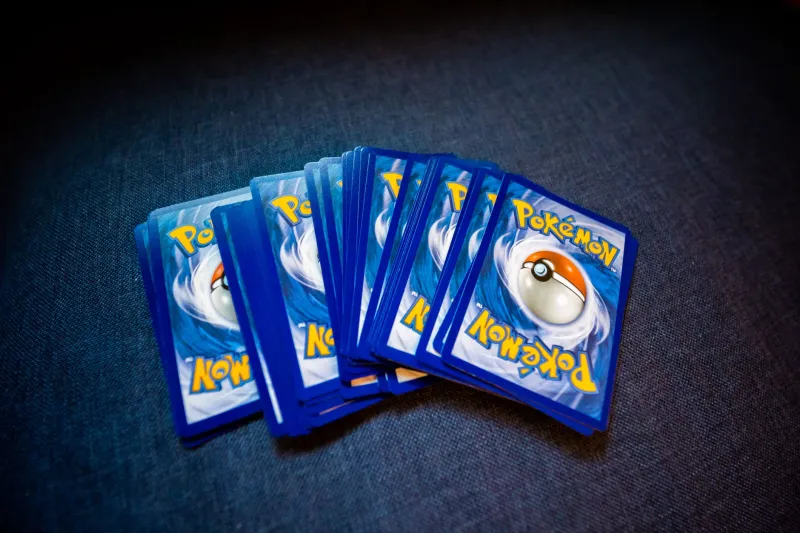
Rotation Season Is Coming — And It's About to Break a Lot of Hearts (and Wallets)

There's a specific kind of dread that settles in around late spring for competitive Pokémon TCG players. You've spent months refining your deck, hunting down the right energy cards, tracking down that one promo you needed to make everything click — and then the announcement drops. Rotation. And just like that, a chunk of your carefully assembled 60-card masterpiece becomes tournament-illegal overnight.
This isn't a new phenomenon. Standard format rotation has been part of the TCG landscape for years. But lately, the frustration around it has gotten noticeably louder — not just from competitive grinders, but from casual players and collectors who are starting to feel the financial sting just as much as the gameplay one.
Let's talk about what's actually happening, who it's hurting, and whether the current system makes any sense going forward.
What Rotation Actually Does (And Why It Stings)
For anyone newer to the competitive side of the TCG, here's the quick version: Standard format only allows cards from a specific window of recent sets. Once a set ages out of that window — usually after about two to three years — those cards can no longer be used in official Standard tournaments. They're not banned for being broken. They're not removed because of balance issues. They're just... out.
The stated goal is to keep the game fresh, prevent power creep from stacking indefinitely, and give newer sets room to breathe. Those are all reasonable objectives on paper. But the real-world execution hits players in ways that The Pokémon Company doesn't always seem to fully account for.
When a rotation hits, entire deck archetypes can vanish in a single announcement. Cards that were worth $30, $40, or more can lose a significant chunk of their competitive demand almost overnight. Players who invested real money building meta-relevant decks suddenly find themselves starting from scratch — again.
The Cards Most at Risk This Cycle
Heading into the next rotation window, several staple cards from the Sword & Shield era are sitting in the danger zone. Cards like Radiant Charizard, various V and VMAX builds, and some of the most-played Trainer cards from sets like Brilliant Stars and Astral Radiance have been foundational to competitive lists for a while now. Once those sets rotate out, the decks built around them don't just lose a piece — they often lose their entire engine.
Scarlet & Violet cards will carry the Standard format forward, which means players who haven't already transitioned their collections are going to feel the pressure to reinvest. And that reinvestment isn't cheap. Building a competitive Scarlet & Violet deck from scratch can easily run $100 to $200+ depending on the archetype, and that's before accounting for the chase cards that tend to spike right after a rotation shakes up the meta.
Collectors Are Caught in the Crossfire
Here's where things get interesting from a collection standpoint. Rotation doesn't just affect players — it ripples through the secondary market in ways that matter even if you've never entered a tournament in your life.
Cards that lose their competitive relevance tend to see price drops. Not always dramatic ones, but enough to matter if you bought in at peak demand. The flip side is that some rotating cards actually hold or gain value over time because they transition into the Extended or Legacy formats, or because collector demand keeps them relevant. Charizard cards, for example, have historically defied the logic that rotation = value loss.
But not every card gets that treatment. A lot of rotating staples just quietly slide into bulk status, and the players who bought them at competitive prices are left holding the difference.
If you're approaching the TCG with even a partial eye toward investment — or if you're a casual collector who also plays — rotation timing should absolutely factor into when and what you buy. Picking up cards from sets that are 12 to 18 months from rotation is a very different decision than buying into fresh Scarlet & Violet releases with two-plus years of Standard life ahead of them.
Is the Rotation Schedule Actually Sustainable?
This is the question a lot of players are starting to ask out loud. The current pace of set releases — combined with a rotation window that can feel like it moves faster than a casual player can keep up with — creates a cycle that some argue is more exhausting than exciting.
In other card games, rotation is often handled with longer notice periods, more granular card-by-card bans, or format splits that give older cards a longer competitive lifespan. Pokémon does have the Expanded format, which allows cards going back to the Black & White era, but Expanded has its own reputation for being chaotic and is far less supported at the local level than Standard.
The result is that Standard feels like the only real option for most players, and Standard is a format that demands constant reinvestment just to stay relevant. For adult players with disposable income, that's annoying. For younger players or families on tighter budgets, it can be genuinely discouraging.
There's a growing conversation in the community about whether The Pokémon Company should slow down set releases, extend rotation windows, or create a more budget-accessible competitive tier. So far, those calls haven't produced much official response — but the sentiment is real and it's not going away.
Which Rotating Cards Might Still Be Worth Holding
Not everything that rotates out becomes worthless. Here are a few categories worth thinking about:
Charizard variants — Almost any Charizard card maintains collector demand regardless of format status. If you're holding competitive Charizard cards from rotating sets, don't panic-sell.
Full Art and Special Illustration Rares — High-end chase cards from sets like Brilliant Stars and Astral Radiance have collector value that tends to outlast their competitive relevance. The artwork drives demand here, not the tournament meta.
Trainer staples that appear across multiple sets — Some Trainer cards get reprinted in newer sets, which can either stabilize or reduce their value depending on how the reprint is handled. Watch for reprint announcements before making moves.
Cards with crossover appeal — Anything featuring fan-favorite Pokémon (Eevee evolutions, Gengar, Mewtwo) tends to hold value better than cards featuring less popular Pokémon, even after rotation.
What You Should Actually Do Before the Next Rotation
If you're currently running a competitive deck, now is a good time to audit which cards are rotation-safe and which aren't. Check the set symbols on your key cards and cross-reference them against the current Standard rotation window. If you're heavily invested in cards that are one rotation away from being phased out, start thinking about whether you want to transition now or ride it out.
For collectors, the window just before rotation can actually be a smart time to pick up cards you want for your personal collection — competitive demand has often softened by then, which can mean better prices on the secondary market.
And if you're a newer player feeling overwhelmed by all of this? You're not alone. The rotation cycle is one of the TCG's biggest friction points, and the frustration you're feeling is shared by players who've been in the game for years. The best approach is to stay informed, build relationships with your local game store community, and never spend more than you're genuinely okay with losing to rotation.
The game is still worth playing. Just go in with your eyes open.